
Recurring drain blockages, slow drainage, unexplained damp patches, and cracked inspection chambers are all signs that something has gone wrong underground. In London, where clay soils dominate and mature trees grow close to Victorian pipe networks, tree root ingress is among the most common causes of structural drain failure. A CCTV drain survey can confirm that roots are present inside a pipe – but it can’t tell you which tree is responsible, who owns it, or what evidence your insurer needs to process a claim. That’s where an arboricultural report becomes essential.
This guide explains how root ingress happens, which tree species cause the most problems in London, and why the two surveys work together rather than being alternatives.
How Tree Roots Get Into Drains
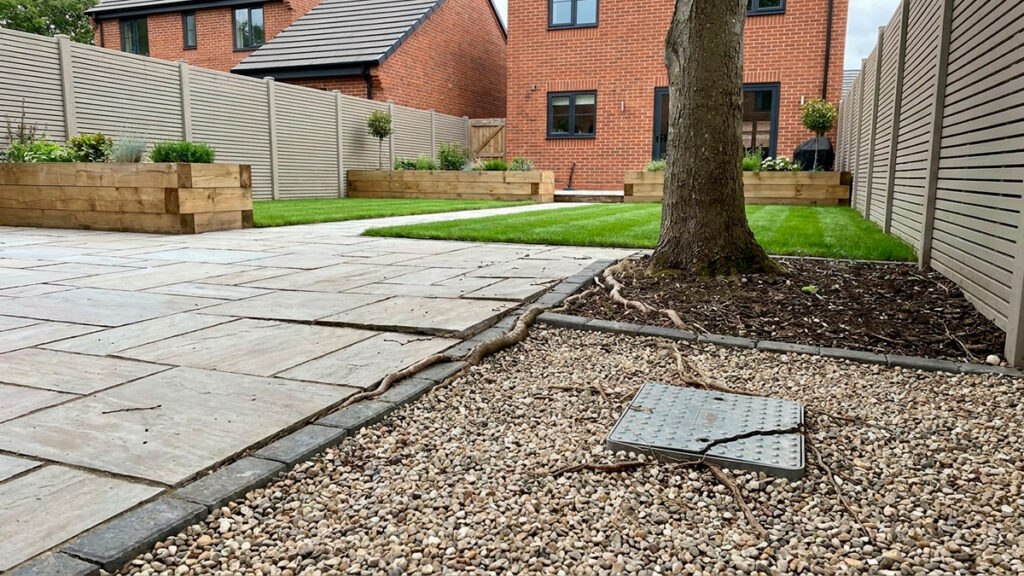
Roots don’t actively seek pipes the way the popular image suggests. They follow gradients of moisture, oxygen, and warmth. A drain carrying waste water leaks vapour through every joint, hairline crack, and porous section of the pipe wall. In London’s predominantly clay subsoil – which dries out significantly during summer and draws roots towards any available moisture source – that gentle plume is enough to redirect root growth towards a drain run. Once a fine root tip finds even a hairline gap, it enters the pipe, absorbs moisture, and grows. Over months and years the root mass expands, restricting flow, displacing joints, and eventually fracturing the pipe entirely.
Old clay pipes are particularly vulnerable. Many of London’s residential drainage systems were laid in the Victorian era with short sections joined by mortar – joints that age, shift with ground movement, and develop gaps through which roots can enter. A pipe in perfectly good structural condition can still suffer root ingress if its joints are old enough and a suitable tree grows nearby.
Which Species Cause the Most Problems in London?
Any tree growing close to a drain run is a potential risk given enough time, but some species are significantly more aggressive in their root behaviour. In North London specifically, sycamore, common lime, crack willow, and poplar are among the most frequently identified culprits in root-related drain damage, with lime roots capable of blocking a 100mm clay pipe within a few years of first ingress, and willow roots known to reach drain runs 20 metres or more from the trunk.
Species to pay particular attention to near drain runs include:
- Willow and poplar: moisture-seeking by nature, with lateral root systems that spread aggressively and can reach well beyond the visible canopy
- Sycamore: the most common tree in London’s residential gardens, with surface roots that spread wide and find drain runs easily
- Common lime: prolific along London streets and in larger gardens, producing dense fibrous root masses once ingress begins
- Oak and ash: slower-growing but with deep, powerful root systems that can displace pipe sections entirely in mature specimens
What a CCTV Drain Survey Can and Cannot Tell You
A CCTV drain survey passes a camera through the drainage system to produce a visual record of pipe condition. It can confirm the presence of root intrusion, identify the exact location of the damage, classify the defect severity, and recommend remedial works. What it cannot do is identify the species or ownership of the tree responsible, assess whether the root spread is consistent with the damage pattern, or provide the independent arboricultural evidence that insurers require when processing a claim involving a neighbouring tree.
This gap matters practically. If your drains have been damaged by roots from your neighbour’s willow or a council-owned street tree, the CCTV report gives you a drainage diagnosis but not a liability position. Without an arboricultural report identifying the tree, its species, its root spread relative to the pipe location, and its ownership, you have no clear basis for a compensation claim or an insurer submission against a third party.
What the Arboricultural Report Adds
An arboricultural report prepared specifically to support a drain damage claim or insurance submission typically covers:
- Species identification and an assessment of typical root spread for the species and the tree’s size
- The distance between the tree and the affected drain run, cross-referenced against the root spread data
- Ownership confirmation – whether the tree sits on your land, a neighbour’s, or is a council-maintained street tree
- An assessment of whether the species and proximity are consistent with the type and location of damage identified in the CCTV report
- Recommendations for management, removal, or root barrier installation where relevant
- Dated photographic evidence and a written report suitable for submission to insurers or solicitors
The combination of the CCTV report and the arboricultural report gives you two independently verified pieces of evidence: one confirming the damage, one confirming the likely cause. Together they form the kind of documentation insurers can act on. Separately, each report leaves significant gaps.
How Insurance Policies Handle Root Damage to Drains
Most standard UK buildings insurance policies cover accidental damage to underground pipes within the property boundary, including damage caused by tree root ingress. However, the distinction between accidental and gradual damage is central to whether a claim succeeds. Policies frequently require evidence that the roots were responsible for a sudden fault, not a gradual accumulation – meaning if a surveyor determines that the root damage has been developing for several years, an insurer may classify it as a maintenance issue and decline the claim.
This makes prompt action important. Getting both a CCTV survey and an arboricultural report commissioned quickly after symptoms appear establishes a clear timeline. Delayed investigation, or carrying out repairs before evidence is gathered, can weaken a claim significantly – or eliminate it entirely. Our guide on tree surveys and insurance claims covers this evidence-gathering process in more detail, including how to protect your position before remedial works begin.
When a Neighbouring Tree Is Responsible
Root ingress from a tree on neighbouring land raises additional considerations around liability. A tree owner has a duty of care to avoid foreseeable damage to neighbouring property, and if it can be shown that the tree was the effective and substantial cause of the drain damage, the tree owner may be liable for repair costs. The arboricultural report is the key document in establishing this – it provides the independent, species-specific assessment of root behaviour that a legal claim or insurer submission requires.
If the tree belongs to the local authority, the same liability principles apply but the process for pursuing a claim moves through the council’s legal team rather than a private insurer. Having a well-documented report prepared early in the process, before the council’s own assessors become involved, puts you in a considerably stronger position. For more on the legal framework around tree ownership and neighbour liability, our post on neighbour disputes and trees sets out the key principles clearly.
Getting the Right Evidence From the Start
Root damage to drains tends to worsen gradually and then fail suddenly – and the point of failure is almost always when the evidence matters most. Acting quickly, commissioning both a CCTV drain survey and an independent arboricultural report before repairs begin, gives you the best possible position whether you’re making an insurance claim, pursuing a third party, or simply trying to understand what has caused the problem and how to prevent it recurring.
Understanding root spread is also relevant where development is planned near existing trees. Our guide to Root Protection Areas on London building projects explains how root spread is calculated and how it informs both construction planning and drainage protection.
If you need an independent arboricultural report to support a drain damage claim or to establish which tree is responsible for root ingress on your London property, our team can carry out a site assessment and produce clear, evidenced documentation for your insurer or solicitor. Find out more about our tree safety report service and our full tree survey and reporting service, or get in touch to discuss your situation.