
Trees are vital for landscapes, biodiversity, and urban aesthetics. However, beneath their healthy exterior, structural issues may develop over time. Internal decay is one of the most common and dangerous problems, as it often progresses out of sight until failure occurs.
Internal decay weakens the wood’s structure, reducing its ability to withstand natural forces such as wind, storms, and snow loads. In high-use areas like parks, streets, and commercial properties, undetected decay can pose serious risks to public safety and nearby property.
What Is Internal Decay in Trees?
Internal decay occurs when fungi or other pathogens break down the structural integrity of a tree’s heartwood. Over time, this can create cavities, soft tissue, and weakened sections that compromise stability. The danger lies in the fact that trees may look healthy externally while being structurally compromised inside.
Common Causes of Internal Tree Decay
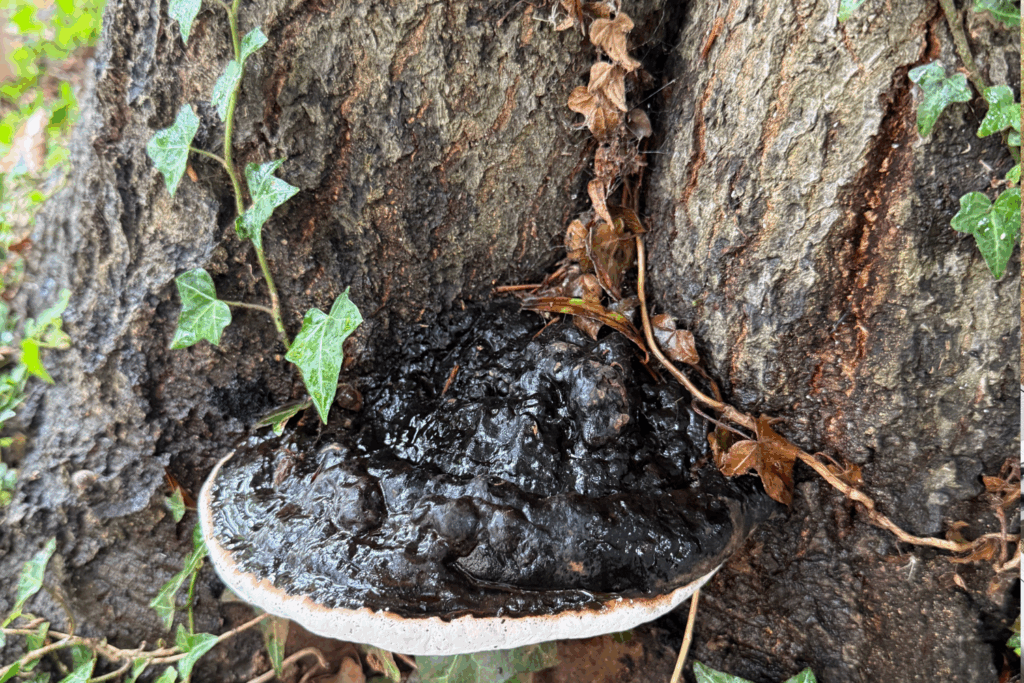
- Fungal infections: Pathogenic fungi such as Ganoderma, Kretzschmaria deusta, and Armillaria are leading causes of decay.
- Physical injuries: Wounds from pruning, storm damage, or vehicle impact allow decay organisms to enter.
- Poor management: Neglected trees, compacted soil, and excessive waterlogging increase susceptibility.
- Ageing trees: Older trees naturally experience internal wood degradation over time.
Why Internal Decay Investigations Are Essential
Tree failures can cause significant harm to people, buildings, vehicles, and infrastructure. Internal decay investigations help prevent such incidents by assessing a tree’s hidden structural condition. They form a critical part of professional tree risk management and are recommended by qualified arboricultural consultants across the UK.
Legal Duty of Care for Tree Owners
Landowners, councils, schools, and commercial property managers have a legal responsibility to ensure trees under their control are safe. Failing to inspect or address hazardous trees can lead to liability under the Occupiers’ Liability Act 1957 and 1984, particularly if injury or property damage occurs.
Early Detection Saves Trees
Investigations can identify internal defects early, enabling arborists to recommend targeted remedial actions instead of opting for complete tree removal. Techniques such as pruning can reduce the weight on decayed or weakened limbs, lowering the risk of branch failure. Cabling or bracing systems can provide additional structural support, stabilising compromised trees and prolonging their lifespan while maintaining public safety.
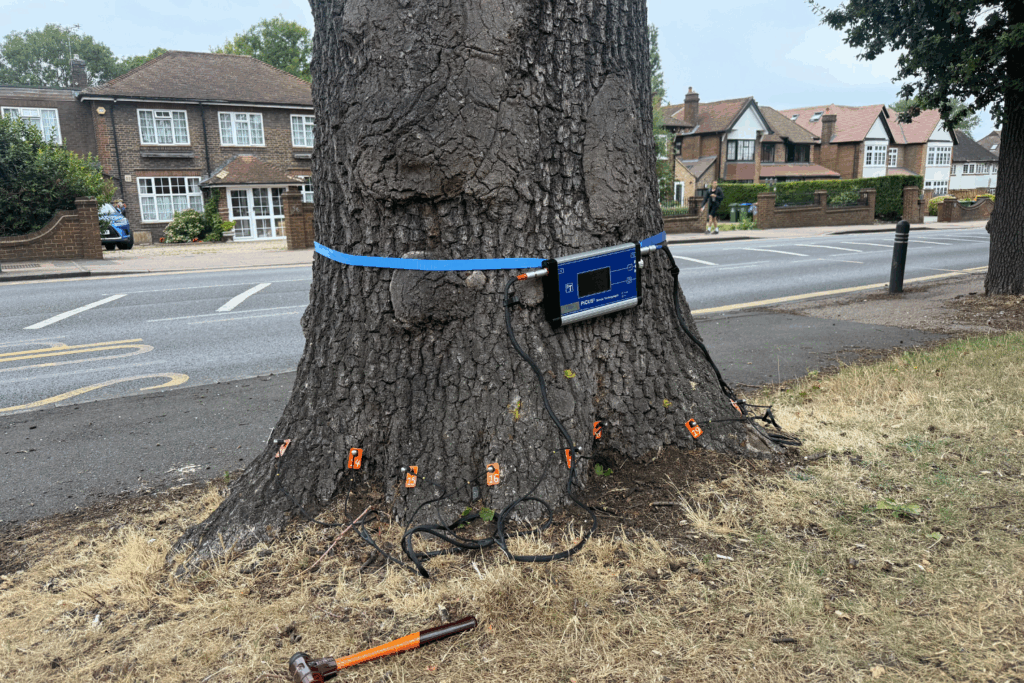
In many cases, decay progression can be monitored over time, with follow-up inspections using tools like PICUS sonic tomography or RESI drill testing to assess whether the decay is spreading or stabilising. Early intervention helps retain valuable, mature trees that provide significant ecological, aesthetic, and environmental benefits, while simultaneously reducing hazards to people, property, and nearby infrastructure.
This proactive approach ensures that tree preservation and safety are balanced effectively, avoiding unnecessary felling and maintaining the character of landscapes, parks, and urban environments.
Signs That Indicate You May Need Internal Decay Investigation
While internal decay is often hidden, certain visible symptoms can indicate potential problems:
- Fungal fruiting bodies at the base or trunk
- Cavities, hollows, or open wounds
- Large cracks or seams along the bark
- Dead or dying branches in the crown
- Soft or spongy wood near the base
- Leaning trees with disturbed root zones
- Trees damaged by recent storms or construction
If you notice any of these signs, a professional inspection is strongly advised.
When Should You Commission an Internal Decay Investigation?
Tree decay detection should not be left until failure is imminent. There are several situations where proactive investigation is recommended
Trees in High-Risk Locations
Trees near playgrounds, schools, busy footpaths, roads, or public spaces have a higher potential for causing injury or damage if they fail. Inspections help ensure safety in these high-traffic areas.
Following Visible Decay Symptoms
The appearance of fungi, cavities, or dead branches often signals internal problems. Investigating early can prevent sudden failure.
After Storm or Mechanical Damage
Veteran trees are ecologically valuable but naturally more prone to decay. Regular internal inspections help balance conservation with public safety.
Large or Ancient Specimens
Veteran trees are ecologically valuable but naturally more prone to decay. Regular internal inspections help balance conservation with public safety.
Periodic Duty of Care Assessments
Many property managers schedule tree surveys every 12–24 months. If a surveyor notes potential structural defects, further decay detection tests may be advised.
Professional Methods Used for Internal Decay Investigation
Tree inspection technology has advanced significantly in recent years. Qualified arboricultural consultants use several diagnostic tools to accurately detect hidden decay:
Visual Tree Assessment (VTA)
A ground-level inspection by a trained arborist looking for structural defects, fungal growth, and overall tree health.
RESI Drill (Resistograph Testing)
The resistograph drill is a highly accurate instrument that uses a fine, needle-like drill to measure the resistance of wood tissue. Areas of low resistance indicate decay, cavities, or weakened structural zones. This method is widely used in arboricultural surveys due to its reliability and minimal invasiveness.
PICUS Sonic Tomography
The PICUS tomography system uses sound waves to create a visual map of the tree’s internal structure. Sensors are placed around the trunk to detect voids, decay pockets, or compromised wood fibres. PICUS is particularly valuable for assessing large, mature trees or those in sensitive public locations.
Electric Resistance Tomography (ERT)
ERT measures internal moisture content to help locate decayed or compromised areas, as decayed wood often holds more moisture than healthy tissue.
These technologies are often combined to provide a precise understanding of a tree’s structural condition and failure risk.
Benefits of Commissioning an Internal Decay Investigation
- Enhanced safety: Reduces the risk of tree failure near people or structures.
- Legal compliance: Helps landowners meet their duty of care obligations.
- Cost-effective management: Detecting decay early avoids emergency removals and damage costs.
- Tree preservation: Enables targeted interventions rather than unnecessary felling.
- Peace of mind: Provides documented evidence of proactive risk management.
Conclusion
Internal decay in trees is a silent threat that can lead to serious safety hazards if left undetected. Commissioning a professional internal decay investigation allows you to assess hidden defects and manage tree risks responsibly.
Qualified arboricultural consultants use advanced diagnostic tools such as the RESI drill PD400 and PICUS sonic tomographyTree Decay Detection London to detect structural weaknesses accurately, often without significant damage to the tree.
If you manage land with mature or high-risk trees, scheduling regular inspections and internal decay investigations is essential for protecting public safety, meeting legal obligations, and preserving valuable trees for future generations.
Call 07709 051535 or Email info@londontreesurveyconsultants.co.uk to Book Your Tree Survey Today