
When buying or refinancing a property in London, lenders may request a tree inspection before approving a mortgage.
This is usually required when trees are located close to buildings. Trees can affect foundations, drainage and long term structural stability.
A mortgage tree inspection helps lenders assess risk and decide whether the property is suitable for lending.
At London Tree Survey Consultants, we carry out detailed tree inspections to support property purchases and help avoid delays during the mortgage process.
Why Mortgage Lenders Request Tree Inspections
Lenders want to protect their investment. Trees near a property can pose risks that may affect its value.
Common concerns include:
- Subsidence caused by tree roots
- Soil shrinkage in clay areas
- Structural movement
- Damage to drains and foundations
If these risks are present, lenders may require a professional tree report before approving the mortgage.
When a Tree Inspection Is Likely to Be Required
A mortgage tree inspection is usually requested when:
- Large trees are close to the property
- The property is built on clay soil
- There is a history of subsidence in the area
- Visible cracks or movement are present
- Trees are taller than the building
Surveyors or valuers may flag these issues during a standard property inspection.
What Happens During a Mortgage Tree Inspection
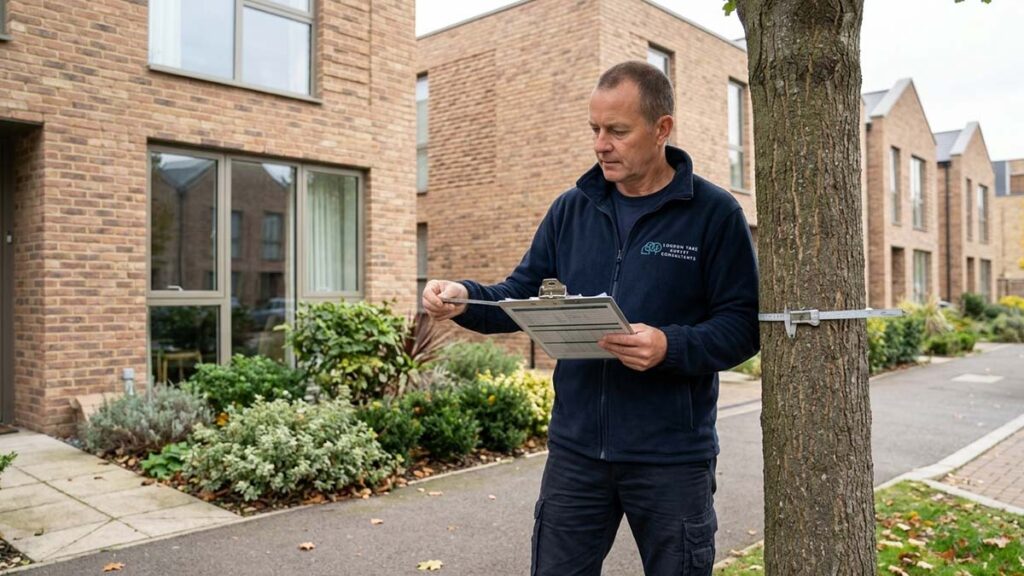
A professional tree inspection involves a detailed assessment of both the trees and their impact on the property.
The process includes:
- Identifying tree species
- Measuring tree height and distance from the building
- Assessing tree condition and health
- Evaluating root influence on foundations
- Reviewing soil type and risk factors
At London Tree Survey Consultants, we provide clear and structured reports that lenders can rely on.
Tree Species and Their Impact on Risk
Different tree species have different water demands and root behaviours.
High water demand trees, such as oak or willow, are more likely to affect soil moisture levels.
This can lead to:
- Ground movement
- Foundation stress
- Increased risk of subsidence
A tree inspection will identify species and explain their potential impact on the property.
Distance Between Trees and Buildings
The distance between a tree and a building is a key factor in risk assessment.
Trees that are too close may:
- Affect foundations
- Interfere with drainage systems
- Increase structural risk
A tree surveyor will calculate safe distances based on tree size, species and soil conditions.
Soil Type and Subsidence Risk
Soil type plays a major role in mortgage tree inspections.
Clay soils are common in London and are more prone to shrink and swell.
When trees extract moisture from clay soil, it can cause:
- Ground movement
- Cracks in walls
- Structural instability
A tree report will assess soil conditions and explain the level of risk.
What the Tree Report Includes
A mortgage tree report provides detailed findings for lenders.
It typically includes:
- Tree identification and measurements
- Risk assessment
- Impact on foundations
- Recommendations for management
- Clear conclusion for lending decisions
At London Tree Survey Consultants, our reports are written to meet lender requirements and help move the process forward quickly.
Possible Outcomes After a Tree Inspection
After reviewing the report, the lender may:
- Approve the mortgage without conditions
- Request tree management work
- Ask for ongoing monitoring
- Decline the mortgage due to high risk
In many cases, simple recommendations such as pruning or maintenance can reduce concerns.
How to Avoid Delays in the Mortgage Process
Tree-related issues can delay property transactions if not handled early.
To avoid problems:
- Arrange a tree inspection as soon as issues are identified
- Use a qualified tree consultant
- Provide clear and professional reports to the lender
- Follow recommended actions if required
London Tree Survey Consultants helps buyers, sellers and lenders resolve tree concerns quickly and efficiently.
Why Professional Advice Matters
Mortgage decisions can depend on the quality of the tree report.
A professional consultant will:
- Provide accurate risk assessments
- Use recognised methods and standards
- Present clear and structured findings
- Support communication with lenders
This ensures the report is trusted and accepted.
Conclusion
Mortgage tree inspections are an important part of property transactions in London, especially where trees are close to buildings.
They help lenders assess risk and protect both the property and their investment.
If you are buying or refinancing a property, arranging a professional tree inspection early can save time and prevent delays.
London Tree Survey Consultants provides expert tree inspections and reports to support smooth property transactions.