
Property subsidence is a growing concern for homeowners, landlords, property developers and commercial building managers across London. Trees provide major environmental benefits, improve biodiversity and enhance urban landscapes, but in some situations tree roots can contribute to movement in the ground beneath buildings.
Professional tree surveys help identify potential subsidence risks before serious structural damage occurs. By assessing tree species, root behaviour, soil conditions and the proximity of trees to buildings, experienced arboricultural consultants can provide practical recommendations that help reduce risk while protecting valuable trees where possible.
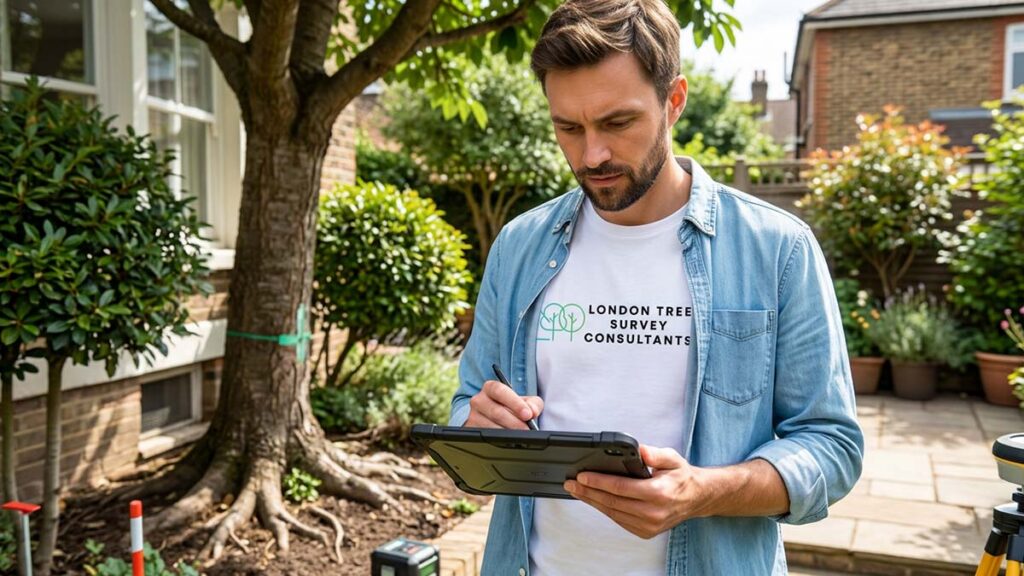
For London properties located on shrinkable clay soils, tree related subsidence investigations are becoming increasingly important during property purchases, planning applications, insurance claims and ongoing building maintenance.
What Is Property Subsidence?
Property subsidence occurs when the ground beneath a building begins to move or shrink, causing foundations to shift unevenly. This movement can result in structural problems that range from small cosmetic cracks to major damage affecting the stability of a property.
Common signs of subsidence include:
- Cracks appearing around windows and doors
- Doors or windows becoming difficult to open
- Sloping floors
- Cracks in external brickwork
- Movement between walls and extensions
- Rippling wallpaper or internal plaster cracking
In London, many areas are built on clay rich soils which naturally expand and contract depending on moisture levels. Large trees can sometimes increase soil moisture extraction, especially during prolonged dry periods.
Why Trees Can Contribute to Subsidence Risk
Tree roots do not normally damage solid foundations directly by breaking through concrete. The main issue is often moisture movement within shrinkable clay soils.
Certain tree species require significant amounts of water. As roots absorb moisture from the ground, clay soils may shrink. If the soil beneath foundations contracts unevenly, parts of the building may begin to move.
Factors that can increase subsidence risk include:
- Large mature trees located close to buildings
- High water demand tree species
- Clay based soil conditions
- Older shallow property foundations
- Long periods of hot and dry weather
- Multiple trees growing near structures
Common high water demand species include:
- Willow
- Poplar
- Oak
- Plane trees
- Eucalyptus
- Sycamore
A professional tree survey helps determine whether trees are likely to be contributing to movement risk.
How Tree Surveys Identify Subsidence Risks
A tree survey provides a structured assessment of trees located near buildings and structures. Arboricultural consultants use professional surveying methods to evaluate the relationship between trees, soil conditions and property foundations.
A subsidence focused tree survey may include:
Tree Species Identification
Different tree species have varying root systems and water demand levels. Accurate identification helps assess the likelihood of soil moisture extraction problems.
Tree Height and Canopy Measurements
Surveyors measure tree dimensions to estimate root spread and potential influence zones around nearby structures.
Root Protection Area Assessment
The Root Protection Area helps determine the likely underground root zone and whether roots may interact with foundations or underground services.
Tree Condition Assessment
The health and condition of a tree can influence root activity. Declining trees, damaged trees or unstable trees may present additional risks.
Site and Soil Analysis
Soil conditions play a major role in subsidence investigations. London clay soils are especially vulnerable to shrinkage during dry weather.
Decay Detection Investigations
Advanced decay detection equipment such as Picus Sonic Tomography and IML Resi drilling may be used to investigate internal structural weakness in trees where safety concerns exist.
The Importance of Early Detection
Early identification of subsidence related risks can help prevent costly structural repairs. A professional tree survey may highlight problems before visible building damage develops.
Benefits of early assessment include:
- Reducing the risk of major structural movement
- Supporting insurance investigations
- Protecting property value
- Helping avoid emergency tree removal
- Supporting planning and development projects
- Improving long term tree management
Many property owners wait until cracks appear before arranging inspections. Earlier surveys often provide more options for managing trees safely and responsibly.
Tree Surveys for Property Buyers and Mortgage Lenders
Mortgage lenders and property buyers increasingly request tree inspections when trees are located close to buildings.
A tree survey can help identify:
- Potential subsidence concerns
- Structural tree defects
- Root related risks
- Tree safety issues
- Future maintenance requirements
- Insurance related concerns
Professional reports provide useful information during property transactions and can help reduce uncertainty for buyers and surveyors.
Managing Trees Without Unnecessary Removal
Removing trees is not always the best or safest solution. Sudden removal of large trees can sometimes lead to soil heave, where moisture returns to previously dried clay soils and causes upward ground movement.
Professional arboricultural consultants help property owners balance tree retention with structural risk management.
Management options may include:
- Crown reduction
- Cyclical pruning
- Root management strategies
- Monitoring programmes
- Soil investigations
- Structural engineering collaboration
- Controlled phased tree works
Careful management can often reduce risk while preserving valuable trees and maintaining environmental benefits.
Tree Surveys for Planning and Development Projects
Tree surveys are also important for planning applications and construction projects across London.
Developers and architects may require:
- BS5837 tree surveys
- Arboricultural impact assessments
- Root protection plans
- Tree constraints plans
- Site development guidance
- Construction monitoring reports
Understanding potential subsidence and root related risks early in the planning process can help avoid delays and unexpected costs during construction.
Why London Properties Require Specialist Tree Assessments
London presents unique challenges due to dense urban development, mature street trees, historic buildings and widespread clay soil conditions.
Professional tree survey consultants understand:
- Local planning authority requirements
- London clay soil behaviour
- Urban tree management
- Tree preservation orders
- Structural risk assessment
- Development constraints
- Advanced decay detection methods
Specialist local knowledge is important when assessing tree related structural risks in complex urban environments.
Professional Tree Surveys in London
Whether you are concerned about cracks appearing in your property, planning a building project or purchasing a home near mature trees, a professional tree survey can provide valuable guidance.
Experienced arboricultural consultants can assess tree condition, root influence, structural risk and subsidence related concerns while helping property owners make informed decisions.
Professional tree surveys support safer property management, better planning outcomes and long term protection for both buildings and trees.