
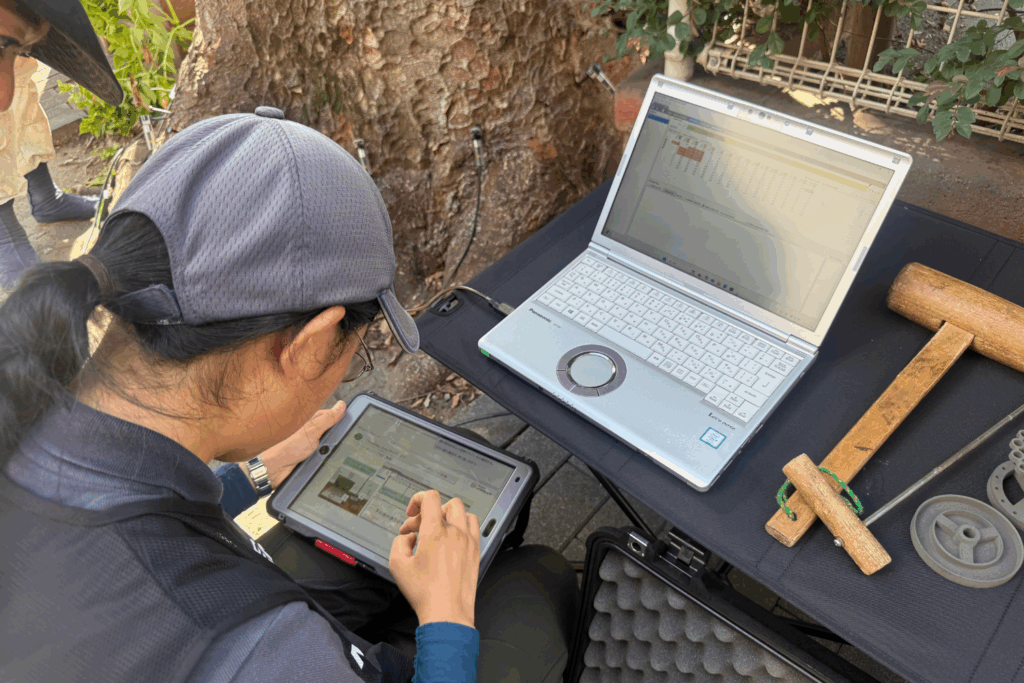
At London Tree Survey Consultants, we believe that collaboration leads to innovation — especially when it comes to understanding and preserving the world’s trees. In a ground breaking partnership with Toshi Landscape in Tokyo, we’ve come together to explore advanced decay detection techniques using industry-leading decay detection tools like the PICUS Sonic Tomograph, ArbSonic, and IML Resi PD500 Drill.
This blog explores our shared mission, the equipment we use, and how working across borders helps refine our understanding of tree health, risk, and conservation.
Why Decay Detection Matters
Urban and veteran trees face constant pressure from environmental stress, construction, and pathogens. Many internal defects go unnoticed until structural failure occurs — sometimes with devastating consequences.
The Hidden Risk of Internal Decay
Trees can appear healthy externally while harbouring internal cavities, fungal decay, or compromised structure. Traditional visual inspections, while essential, often miss what lies beneath the bark.
That’s why decay detection is a vital part of modern arboriculture — especially in high-target zones like footpaths, roads, schools, and residential developments.
Tools of the Trade: PICUS, ArbSonic, and IML Resi PD500
Together with Toshi Landscape, our London-based team tested and shared insights into three advanced instruments used in tree decay detection. Here’s how each one contributes to a clearer internal picture of tree structure.
PICUS Sonic Tomograph
Manufactured in Germany, the PICUS Sonic Tomograph is a non-invasive tool that maps the internal structure of tree stems using sound waves.
- How it works: Sonic sensors placed around the trunk detect how quickly sound waves pass through the wood. Decayed or hollow areas slow the waves down.
- What it shows: A cross-sectional image revealing the density and condition of wood.
- Why it’s useful: Allows visualisation of decay extent without cutting into the tree.
This device played a key role in our collaborative study, particularly when analysing mature beech and zelkova specimens across both cities.
ArbSonic Tomography
ArbSonic offers a modern, user-friendly platform for sonic tomography, allowing precise analysis and faster fieldwork.
Real-time data capture
Lightweight sensors ideal for urban settings
High-resolution imaging compatible with modern GIS mapping
The Tokyo team demonstrated the device’s capabilities in compact public parks, while we shared examples from tight-access London gardens.
IML Resi PD500 Microdrill
The IML Resi PD500 is a highly sensitive resistance drill that provides linear readings of internal wood density.
How it works: A fine needle drills into the tree at high speed, recording resistance on a graph.
Ideal for: Confirming sonic results, pinpointing rot lines, and assessing residual wall thickness.
Advantages: Quick, minimal impact, and highly accurate.
Toshi Landscape found the Resi invaluable for street trees near historic walls and temples, where trunk integrity is critical.
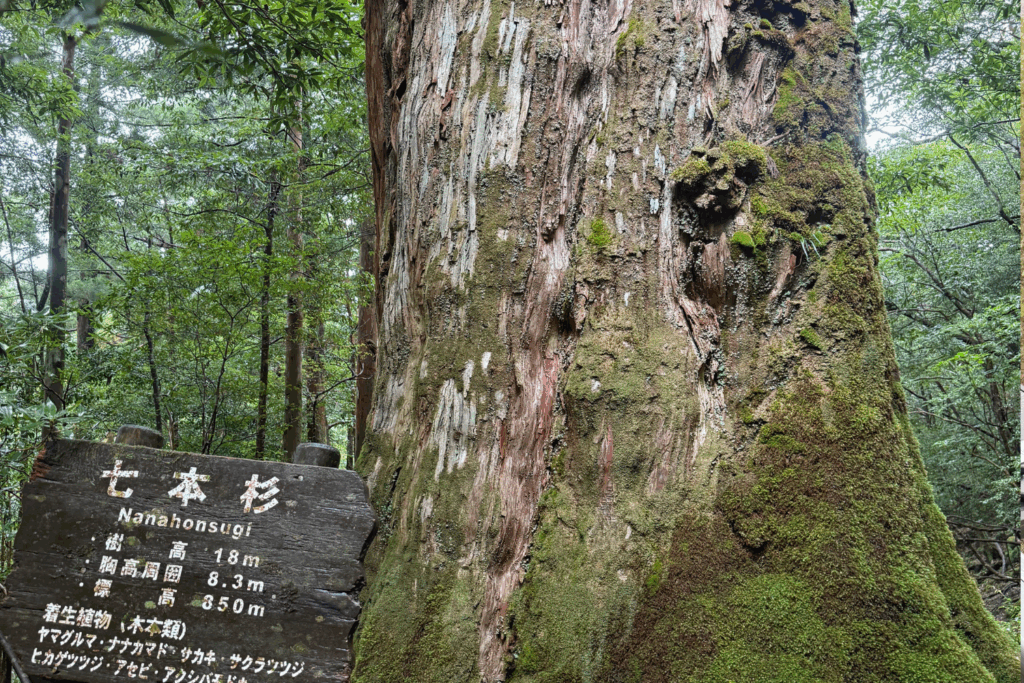
Learning Together: London–Tokyo Knowledge Exchange
Why International Collaboration Matters
Working with colleagues across the globe allows us to refine our methods, exchange ideas, and improve consistency in tree risk assessment.
Despite the differences in climate, tree species, and urban density, both teams found common ground in:
The need for objective decay data
Balancing tree conservation with public safety
Advocating for non-invasive assessment techniques
A Shared Goal: Saving Trees Through Knowledge
By combining expertise, we improve our ability to make accurate recommendations — whether that’s pruning, monitoring, or, when necessary, removal. This helps preserve long-standing trees that might otherwise be unnecessarily felled due to uncertainty.
Practical Benefits of Decay Detection Collaboration
Our joint work has helped shape a more efficient and data-driven workflow, benefiting clients in both cities.
For London Clients
- Improved interpretation of tomography data
- Stronger casework when applying for planning consent or TPO exemptions
- Reduced risk of liability through evidence-based reporting
For Tokyo Sites
- Enhanced decision-making around temple and parkland trees
- Improved communication between arborists, planners, and local authorities
- Training staff to use international-standard techniques
What We Learned from Tokyo
While our tools and qualifications align, we were inspired by the precision and care with which Tokyo teams engage with each individual tree. There is a deep cultural respect for trees, especially those over 100 years old, and a commitment to preserving heritage specimens.
Their use of decay detection is not simply about safety — it’s part of a broader tree stewardship philosophy we admire and are working to adopt more fully in our London projects.
Conclusion: Uniting Through Innovation in Tree Preservation
This collaboration between London Tree Survey Consultants and Toshi Landscape has shown that when arborists unite across continents, we create a stronger, smarter future for urban tree care.
With tools like PICUS, ArbSonic, and Resi PD500, and a shared commitment to best practice, we’re building a deeper, more respectful understanding of what it means to protect trees — not just for safety, but for future generations.
Together, we’re proving that science and stewardship can go hand in hand.
Call 07709 051535 or Email info@londontreesurveyconsultants.co.uk to Book Your Tree Survey Today